
Now let me tell you how it REALLY goes, because we hear the sentence in the title almost every week in DMs. It is usually followed by: “…but I’ve wanted to try for years.”
What are the three myths we need to kill first?
“You need to be sporty.” No. You need to know how to swim and accept falling into water. Spoiler: the water looks much more dramatic than it feels. What really helps is patience and humour. The core strength will arrive by itself; consider it a bonus at the end of the week.
“Everyone will know I’m a beginner.” At Devil’s Rock, around 80% of people in the water are learning. It may be the only sport where the beginner zone is both the most crowded and the happiest part of the beach. Nobody judges. Everyone is too busy falling with style.
“I’m too old to start.” We have seen first waves at 34, 47 and 61. The ocean never asked for ID. Neither did the board.
What does your first surf lesson look like hour by hour?
9:00. The forecast check. Your coach has already read the conditions: tide, wind, wave size, and chosen the best slot. Your job is to listen. If you want to understand what they are looking at, we wrote a no-jargon surf forecast guide.
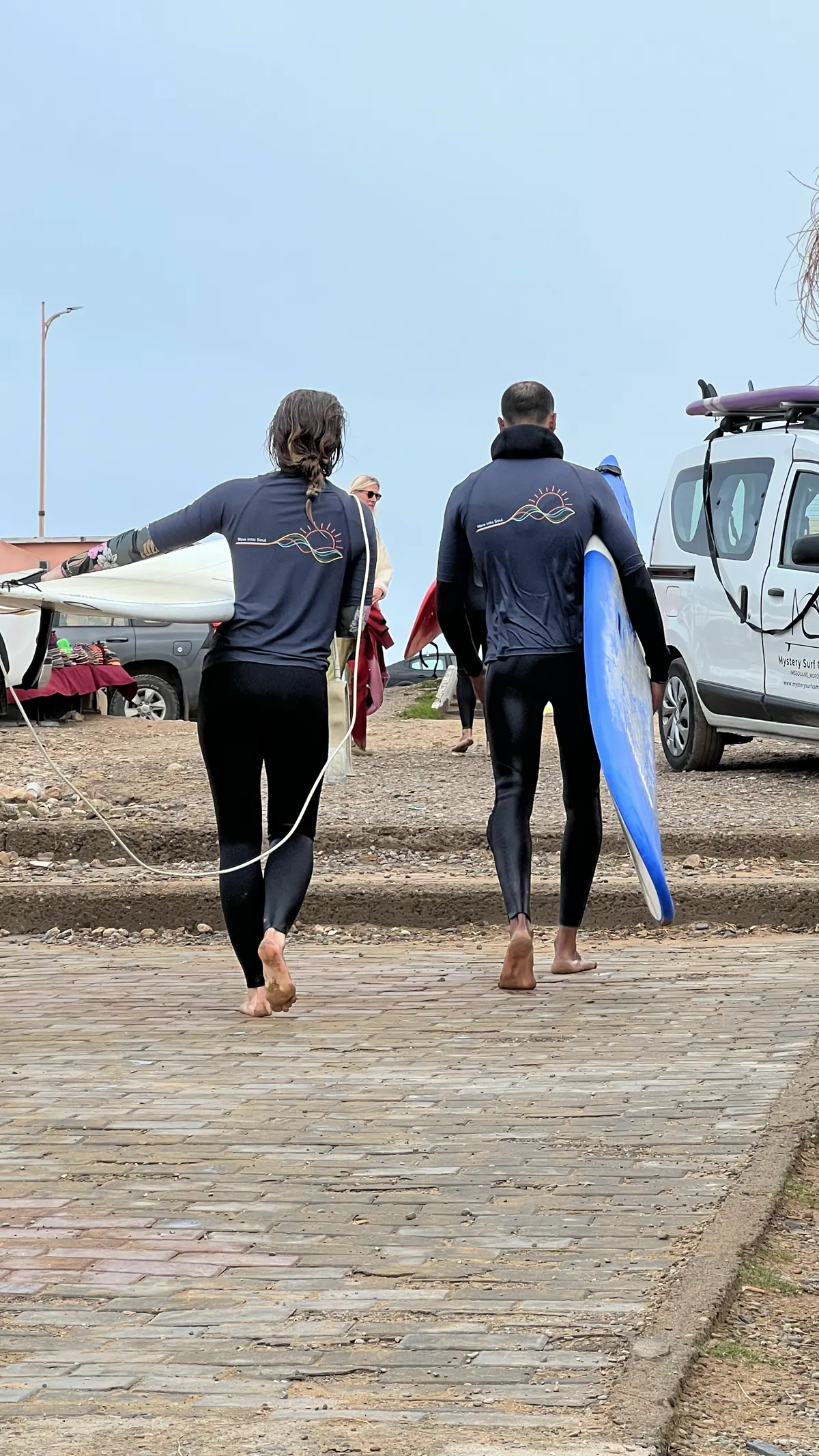
9:15. The wetsuit. Comedy moment. Putting on a wetsuit for the first time is a sport of its own. Everyone goes through the neoprene dance; everyone laughs. It breaks the ice better than any team-building exercise.
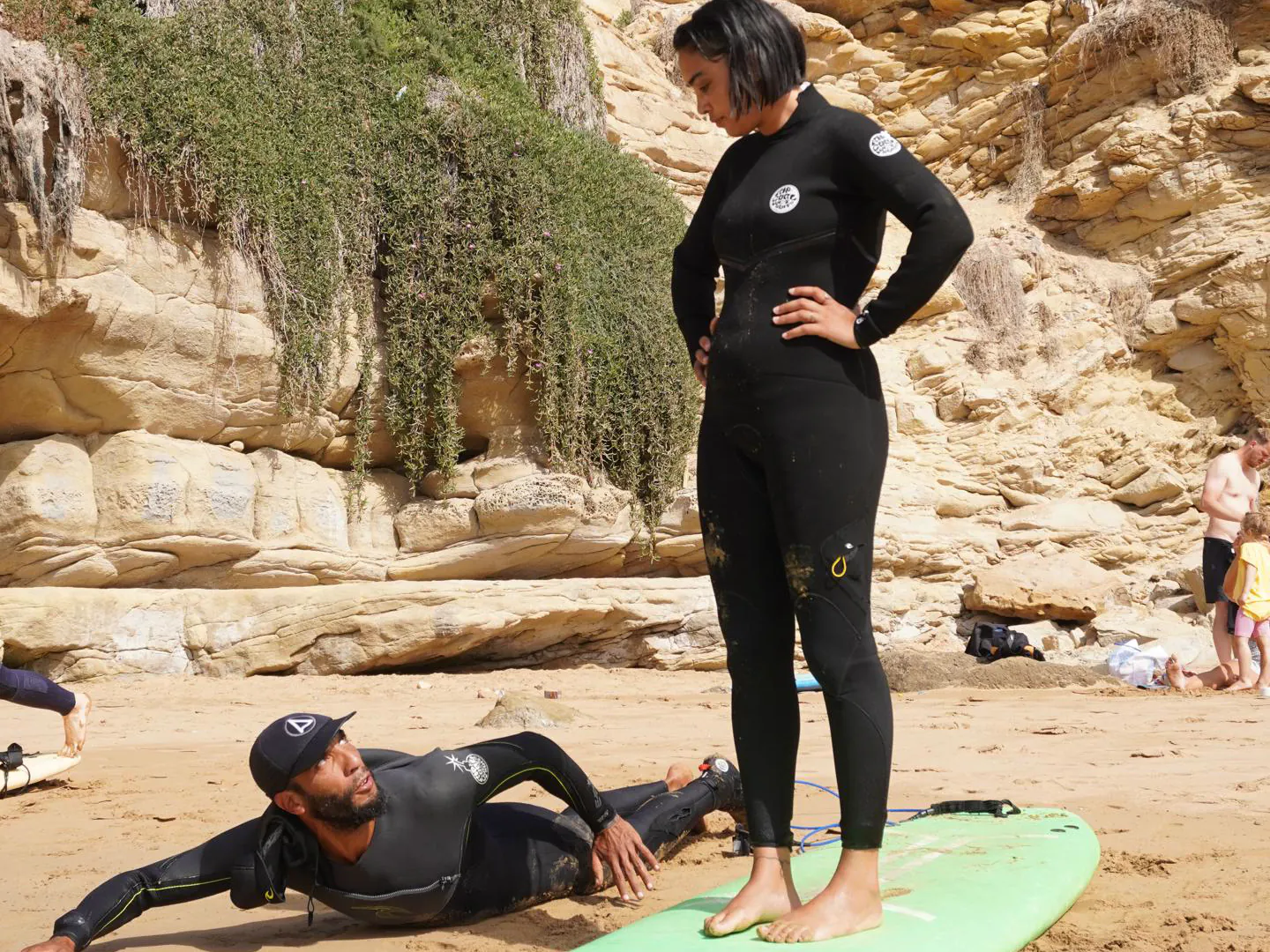
9:30. On the sand. Board anatomy, safety position, and THE movement: the take-off, going from lying down to standing. You repeat it ten times on the sand. On sand, everybody can do it. This is both reassuring and mildly suspicious.
10:00. The water. First surprise: the water is at your waist, not over your head. Whitewater, broken waves rolling in like a soft white carpet, is your playground. The coach holds your board, chooses the wave and pushes at the right moment. Your only mission: stand up.
10:05. First attempts. Forward fall. Backward fall. A new artistic fall that has not yet been named. This is the normal programme, and this is where the laughter starts. Falling in water where you can stand has almost nothing to do with the fear you had built in your head.
10:40. THE wave. At some point, third attempt for some, thirtieth for others, it does not matter, your feet find the board, your arms open, and you GLIDE. Three seconds, maybe five. For a few seconds, time slows down. Someone on the beach claps. And suddenly you understand why people keep coming back to the ocean.
11:00. Getting out. Arms like noodles, non-negotiable smile, happy shipwreck hair. Someone took photos. You will hate your face in them. You will keep them for years.
What happens with the fear?
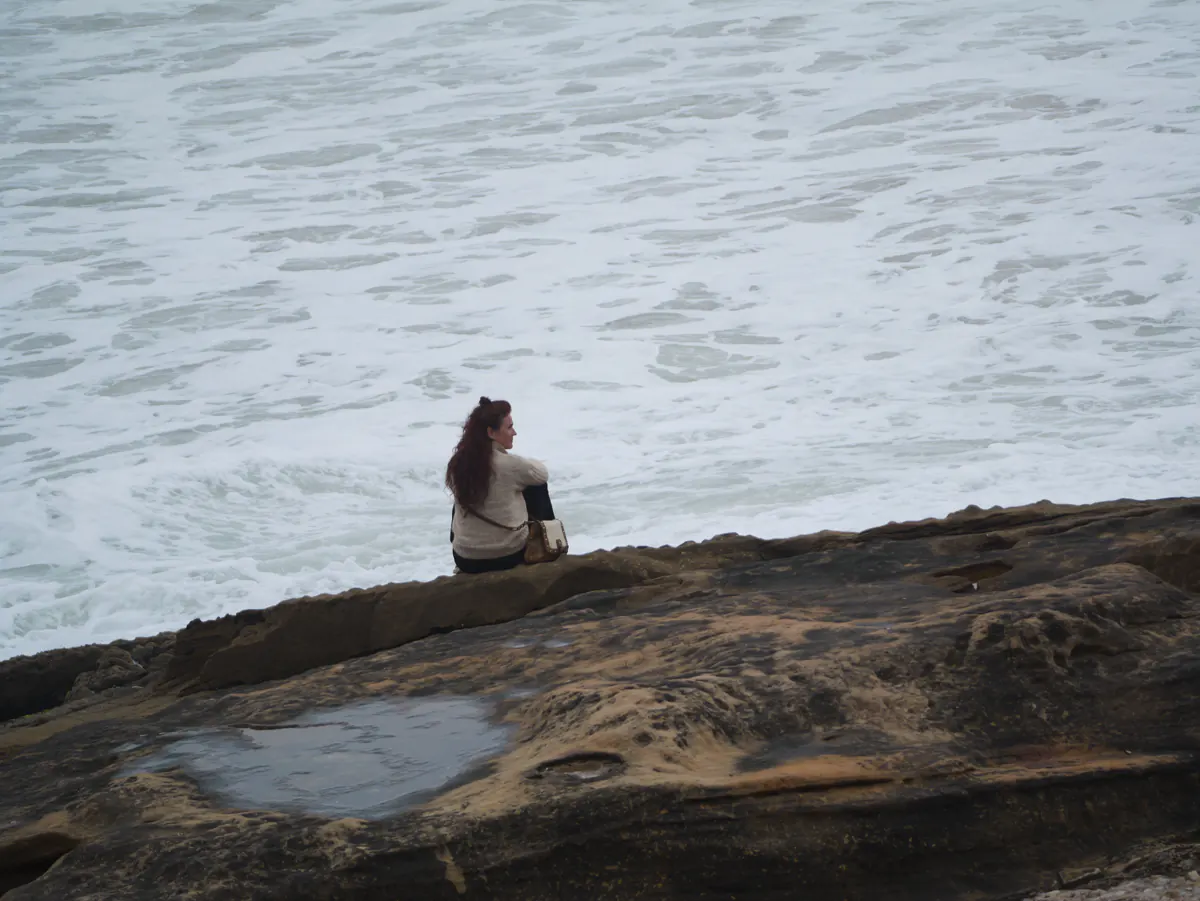
It will be there at the beginning. That is expected. Here is what melts it, in order:
1. Waist-deep water. Your brain realises it can literally stand up at any moment.
2. The ratio. With a maximum of 4–5 students per coach, you are never “released into the ocean”. The coach always has an eye on you.
3. You can pause at any time. A pause on the sand is not failure; it is energy management. The best students are the ones who listen to themselves.
And if you have a real fear of water, say it BEFORE. Good coaching adapts everything. Some of the most beautiful moments we have seen in the water started with: “I need to tell you, I’m scared.”
What does the rest of the week look like?
- Days 1–2: whitewater, take-off, balance. Goal: glide standing.
- Days 3–4: reading whitewater, choosing your wave, paddling by yourself. First accidental turns, then intentional ones.
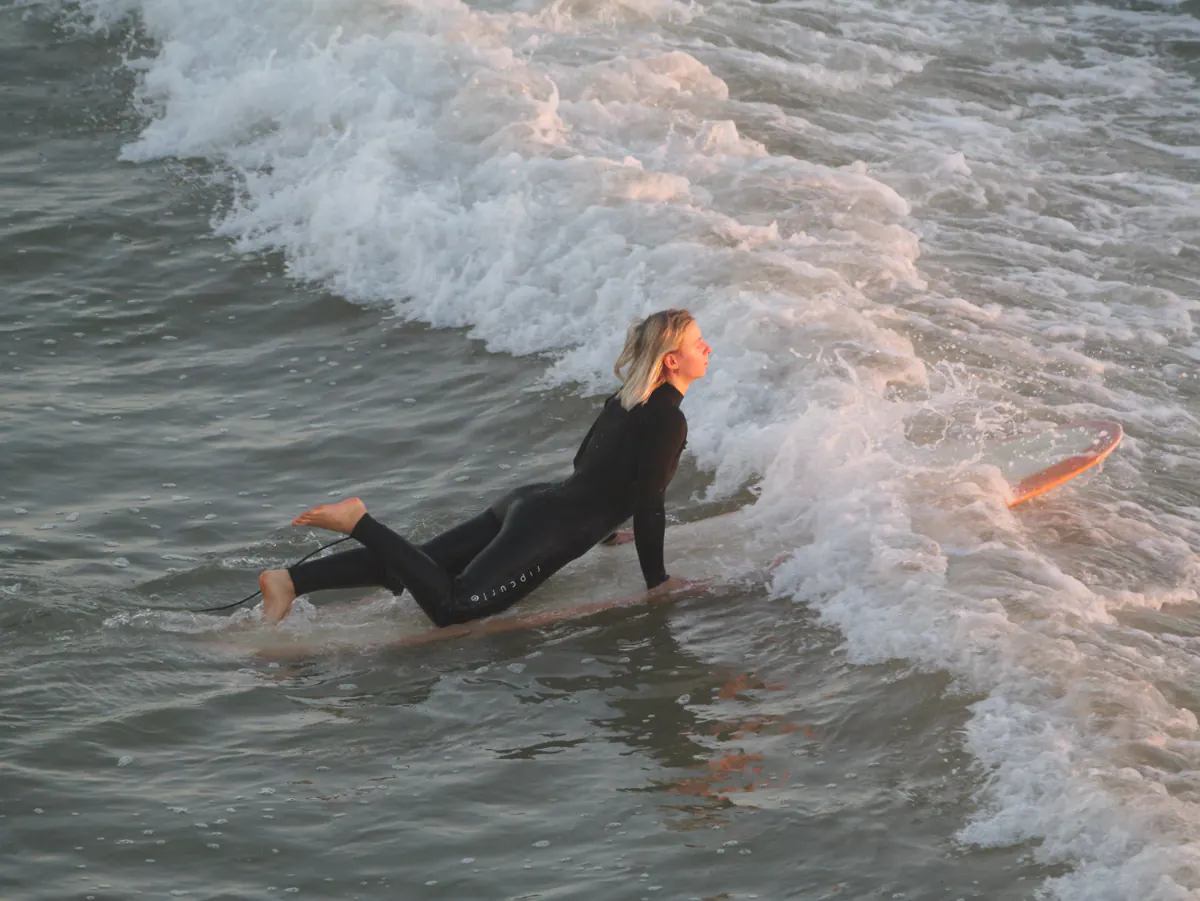
- Day 5: depending on your rhythm, longer whitewater rides, or first small “green” waves at the line-up with the coach beside you.
- Every day: new sore muscles you did not know existed, treated with tajine and naps. Morning yoga is not there to look pretty in photos; it genuinely helps your body recover.
The truth no school puts in huge letters: progress is not linear. Day 4 may be worse than day 3. The ocean teaches patience too. That is part of learning.
FAQ
Yes. If you can swim, you can begin in whitewater with a coach. Stamina and core strength build during the week, not before it.
Many adult beginners stand up on a whitewater wave during the first or second lesson, with a suitable softboard and a coach pushing at the right moment.
There is no official maximum age. Surf schools in the bay regularly welcome beginners in their 40s, 50s and beyond; the pace is simply adapted.
Yes. First lessons take place in whitewater, usually with water between waist and chest height.
Around 2 hours in the water, plus the beach briefing. During a surf week, two sessions per day is common, with rest and recovery around it.
With a coach, on a sandy-bottom beginner beach like Devil’s Rock, risks are low. The coach manages conditions, zone and equipment such as foam boards and leashes. The rule is simple: start guided, never alone.
---
MORE Lodge, in Tamraght: weeks designed for beginners, reassuring coaches, small groups, yoga that repairs, and a rooftop that celebrates. Tell us about your relationship with the ocean on WhatsApp, we will honestly tell you which week is right for you. [→ Chat on WhatsApp] [→ See the next weeks]