Now, the real story.
The first time someone asked me, I answered like a brochure: number of beds, price, activities. Today I answer differently, because I have slept in both before choosing to build one: the real question is not "which is better", it is "what does your ideal evening look like after two surf sessions".
The camp is the extrovert of the family
The archetype: a big house or a small complex, 30 to 50 beds, dorms of 4 to 8, a young team and contagious energy. The days are organised (group sessions, video analysis in the evening, collective outings), and the evenings exist. Really.
It is a brilliant formula for what it is: at 22, travelling alone, you arrive knowing nobody and by the first evening you have twenty friends. The price is gentle, the atmosphere is simple, the energy carries you. I have had very good nights there.
What the brochure says less: in a dorm of six, your sleep belongs to the last person to bed and the first one up. The collective programme moves at the group's pace, not yours. And if your ideal day ends with a book rather than beer pong, you risk feeling like a spectator at a holiday that is not quite yours.
The surf house is the quieter sister
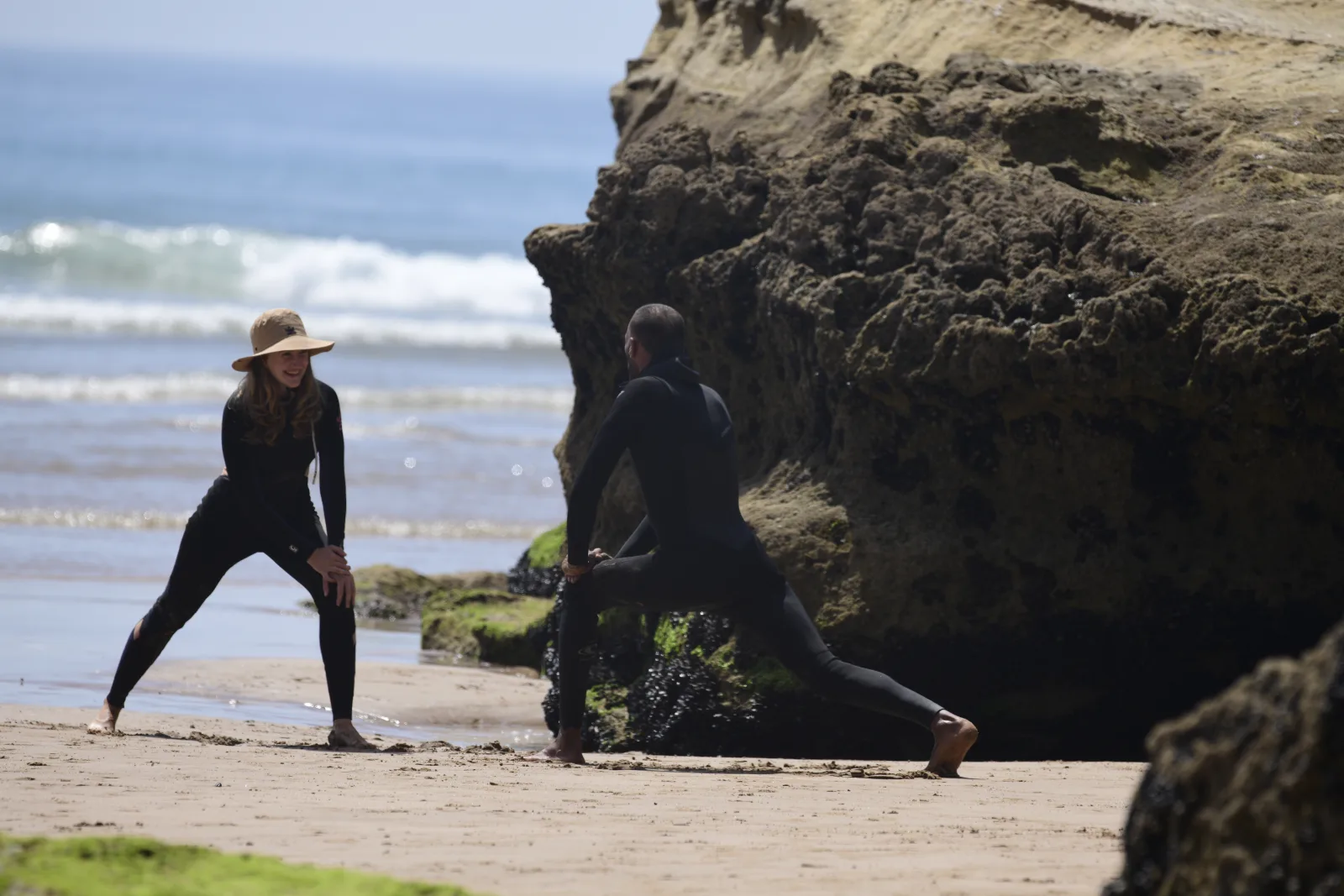
Shrink the scale: one house, six rooms, one small group at a time. Rooms you choose, shared to meet people, private to breathe. Home-cooked meals around one table, coaching in a small group, and afternoons that belong only to you: surf again, hammam, nap, nothing.
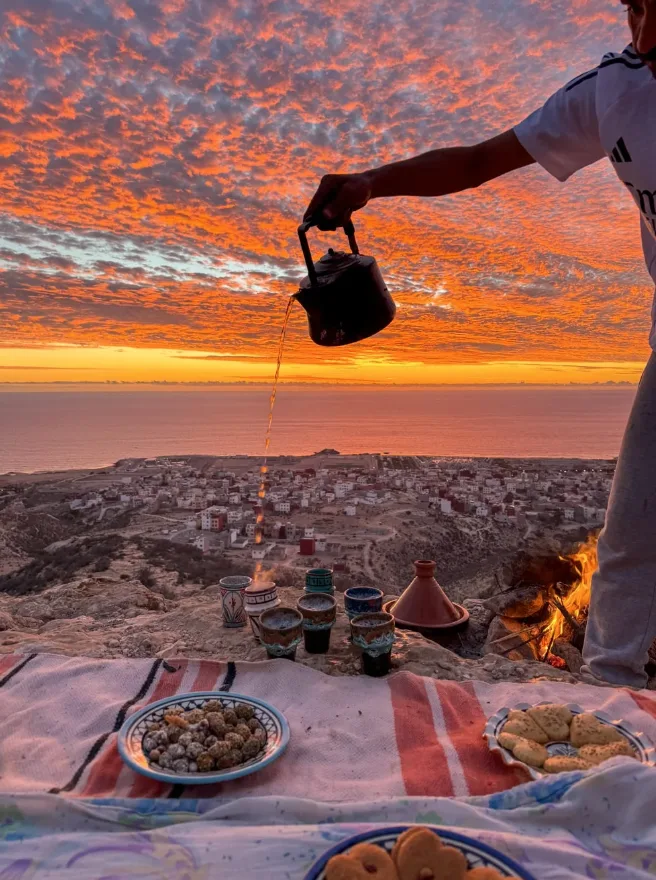
In the evening something happens, but that something is a dinner that stretches, tea on the rooftop, conversations that last. Not monastery silence: a warmth that does not need speakers.
The trade-off is real, and I would rather tell you now than on arrival: it costs more than a dorm bed, and if you are looking for a party you will not find it on site. Taghazout is ten minutes away for that, and that is exactly right.
The comparison, without spin
- Size. Camp: 30 to 50 people. House: one small group, in six rooms.
- The night. Camp: dorm of 4 to 8. House: shared room (max 4) or private.
- Average age. Camp: 20 to 30. House: 28 to 50.
- The day. Camp: collective programme. House: coaching in the morning, free afternoon.
- The evening. Camp: activities, parties. House: long dinner, rooftop, calm.
- Sleep. Camp: a lottery. House: yours.
- Advertised price. Camp: lower, but read the inclusions. House: higher, but final.
- You leave with. Camp: twenty party friends. House: a few people you will genuinely message again.
On prices: the camp advertised at €455 and the house advertised at €660 are often closer than they look once lessons, equipment and meals are added, we did the maths in detail here.
The real criterion: your ideal evening
Forget the age on your passport, it is a shortcut. The real question: what does your ideal evening look like after two surf sessions?
If the answer contains music, plenty of new people and a late start, the classic surf camp is made for you, and it does that better than anyone.
If the answer looks like a hot shower, a proper dinner, a conversation that matters, and sleeping because the swell is good at 7am, then you have already chosen, and you might not have known it yet.
Three concrete cases to place yourself
You are travelling alone, 34, first surf trip. Both work, but the small group changes everything: in a house it is impossible to stay invisible, and connections happen around a table rather than at a bar. We wrote a whole guide on coming alone.
You are a couple, 40, different levels. The house, without hesitation: private room, coaching by level in the morning, and nobody apologises for preferring a nap to the afternoon session.
You are four friends, 25, on a tight budget. The classic camp, sincerely. You will live the collective experience fully, and the dorm will only cost you sleep you were not planning on anyway.
FAQ
Scale and rhythm: the camp hosts 30 to 50 people in dorms with a collective programme and evenings out; the house keeps to one small group, in rooms, with coaching in the morning and a free rhythm the rest of the time.
Yes, that is exactly the niche of surf houses and some "30+" camps. The giveaway signs: size (under 25 guests) and no built-in bar.
No, and nobody will turn you away. But the average age in classic camps sits around 25, with the evening rhythm that comes with it. The question is not age, it is the kind of week you want.
It is calm, not dead: long dinners, conversations, rooftop. And Taghazout's nightlife stays ten minutes away by taxi whenever you fancy it, you choose, every evening.
It is actually the ideal formula for it: a small group around a table integrates you better than a noisy dorm. Many of our guests arrive alone and leave with real connections.
The waves are the same; what changes is the coaching. Check the coaching group size (6 to 8 maximum to progress) and whether the coach picks the spot each day according to conditions.
---
Then we probably speak the same language. Write to us on WhatsApp, tell us who you are, your dates, and whether you prefer a room of your own or the shared table: we answer like humans, not like a booking engine.