Now, the real story.
I get asked this almost every day in DMs, always with the same worry underneath: what if I choose the wrong month and pay for a flight for nothing? So let me be honest with you, the way I am with everyone who writes before booking: the month everyone tells you to pick (January, because that's when the surf magazines take their photos) is probably not yours.
The four seasons of the bay, as I see them
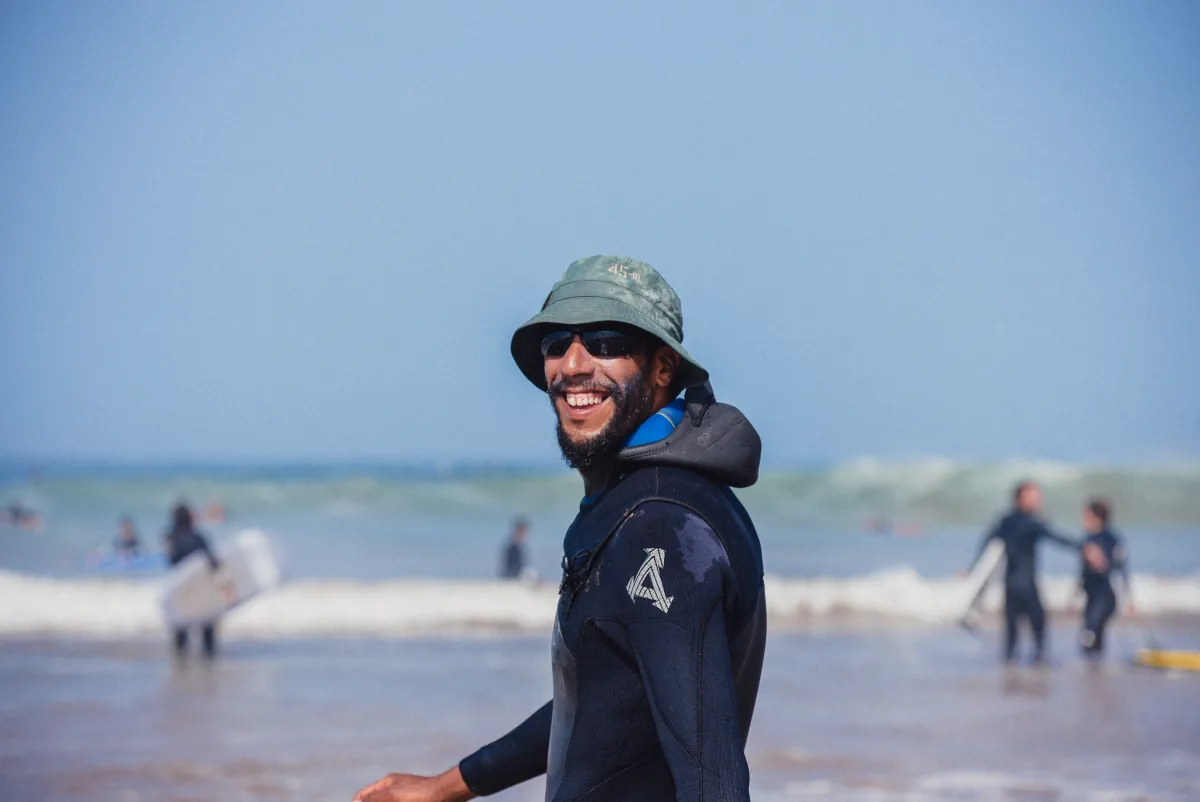
Autumn (mid-September to November). The season wakes up, and it's my favourite stretch of the year in Tamraght. The first proper swells arrive, the water is still warm after summer, around 20–21°C, and the light turns that deep gold Morocco is famous for in photos. Locals quietly keep October to themselves: real waves, warm evenings, and the summer crowds gone. If you can only pick one month, pick this one.
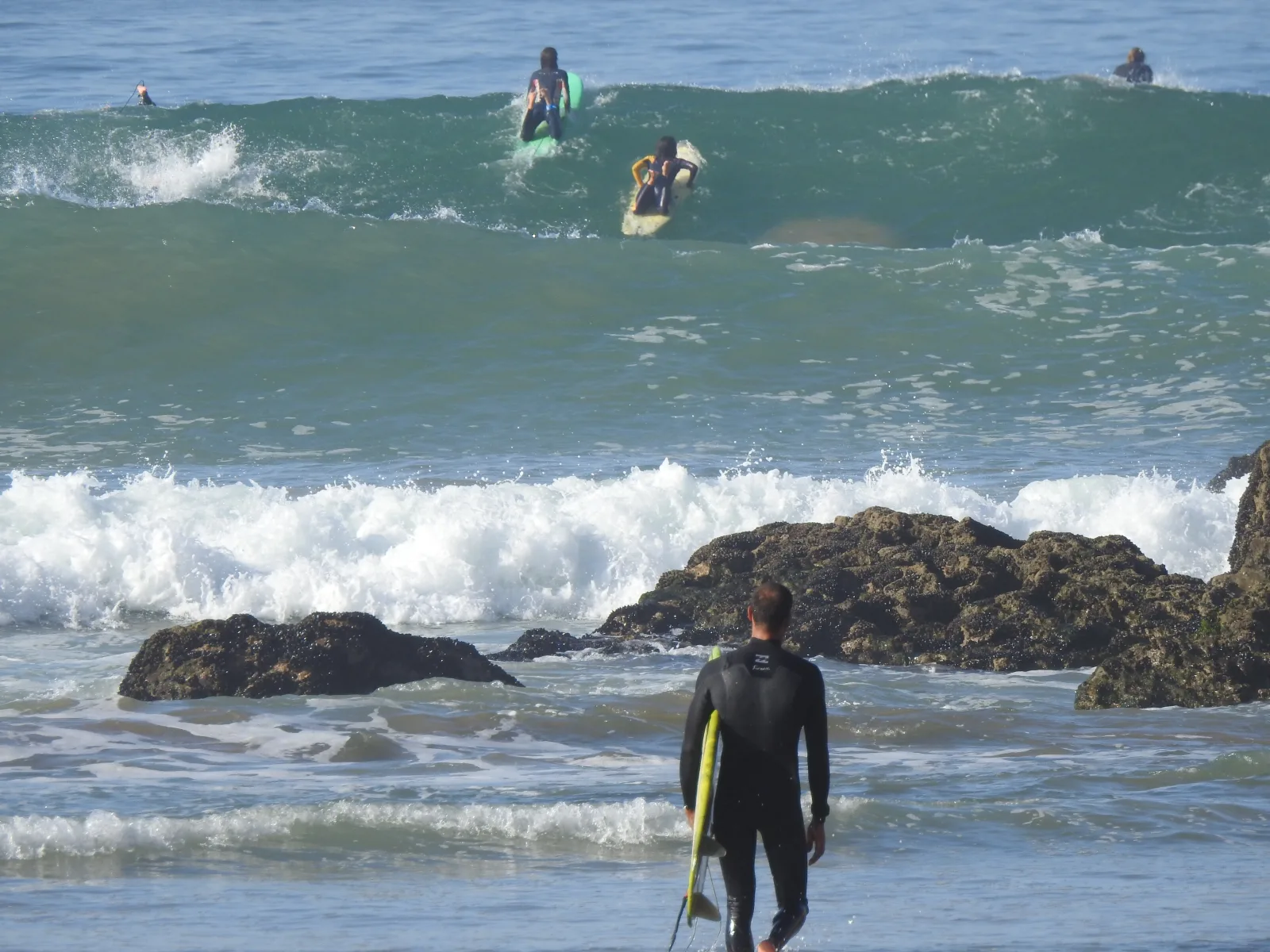
Winter (December to February). The big season, the one in the magazines. North Atlantic storms send long, organised swell lines, and the point breaks (Anchor Point, Killer Point) do what made them famous. It is also the busiest and most demanding period: waves are bigger, currents stronger, and the best spots get crowded with surfers who fly in exactly for this. Brilliant if you already surf. A little rough if you're learning, I've seen discouraged beginners on day one because nobody told them January wasn't built for them.
Spring (March to May). The season exhales, and May is my best-kept secret. Swells soften but keep coming, days get longer, and by late April the bay turns quiet. Small clean waves, empty beaches, and a village that has time to talk to you again.
Summer (June to August). Small waves, hot days, and a completely different bay: this is when Moroccan families take over the beaches, and the atmosphere becomes wonderfully local. You can absolutely learn to surf, the whitewater at Devil's Rock does not care what month it is, but if you're already dreaming of big waves, you'll be checking the forecast twice a day for not much.
Month by month, for anyone who likes a table
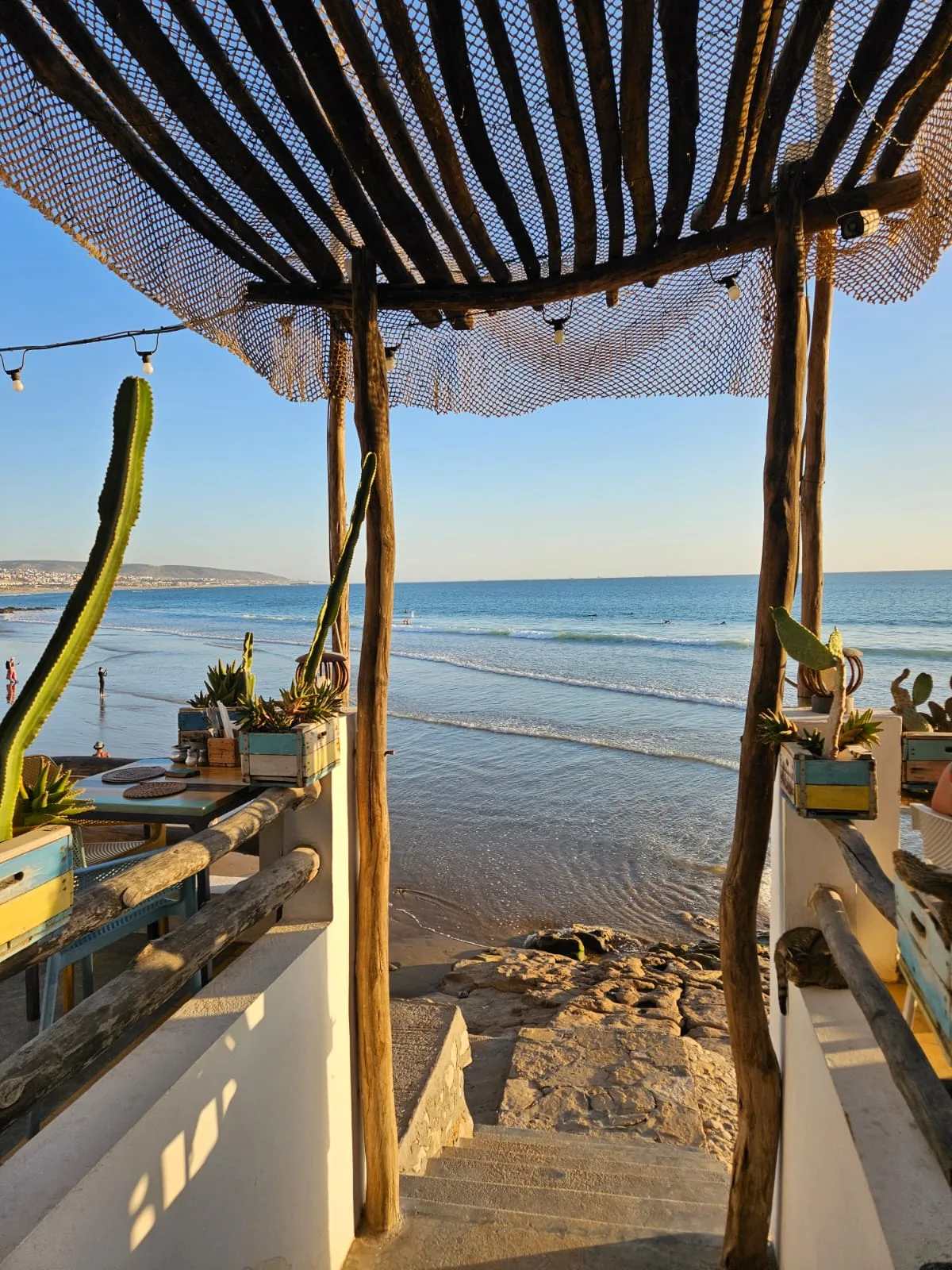
| Month | Waves | Water | Crowds | Best for |
|---|---|---|---|---|
| September | building | 21°C | low | everyone, the sweet spot begins |
| October | consistent | 21°C | medium | everyone; locals' favourite |
| November | consistent | 20°C | medium | improvers and up |
| December | big | 19°C | high | experienced surfers |
| January | big | 18°C | high | experienced surfers |
| February | big | 18°C | high | experienced; late-season power |
| March | solid | 18°C | medium | improvers and up |
| April | softening | 19°C | low | beginners, slow travellers |
| May | small, clean | 19°C | very low | beginners; the quiet secret |
| June | small | 20°C | low | first-timers, families |
| July | small | 21°C | local | first-timers; hot |
| August | small | 21°C | local | first-timers; hot |
On wetsuits: a 3/2 works all year; from December to March you'll be glad it fits well.
The part most guides get backwards
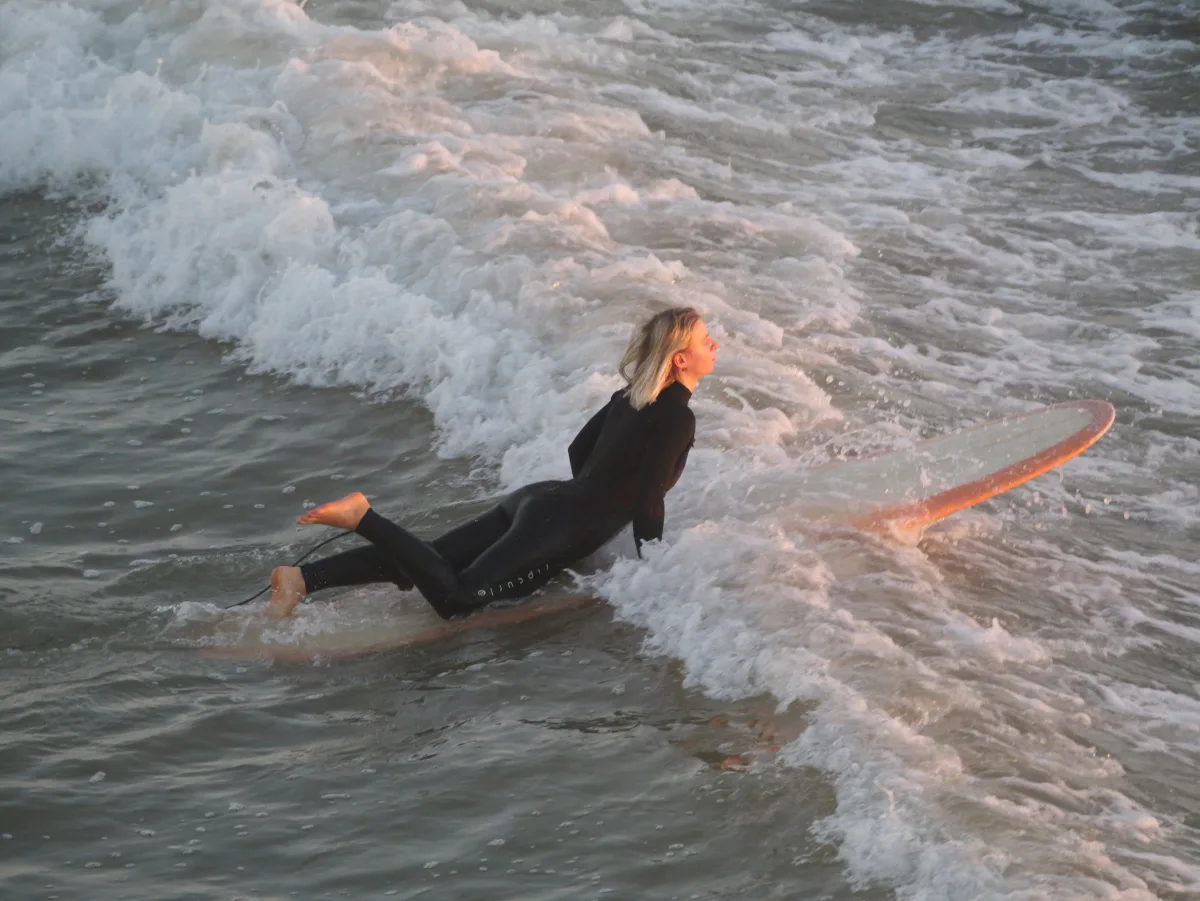
Most surf-season guides are written for the surfer chasing the biggest wave of their life. So they crown December and January, and they are right, for that reader.
But if you're the person we mostly host here, someone learning, coming back to surf after years, or here for slow mornings as much as for waves, the calendar flips completely. What you want isn't maximum swell, it's forgiving waves, warm water, and space. That's exactly April–May and September–October, precisely the months the classic guides call "shoulder season" as if it were a consolation prize. It isn't.
A 60cm wave in May will teach you more than a 2.5m wall in January that never lets you paddle out. I've watched this scene play out a hundred times: the confident surfer who comes in winter for the power, and the beginner who leaves with her best memories on a quiet Tuesday in May, with nobody else in the water to see it.
What about Ramadan?
Ramadan shifts each year (in 2027 it falls in winter). The village slows down in the daytime and comes alive after sunset; tourist restaurants and surf schools keep working normally. It's a different rhythm, not a closed door, some of our guests remember it as the most striking week of their year, that daytime quiet followed by the village switching back on at sunset.
So when should *you* book?
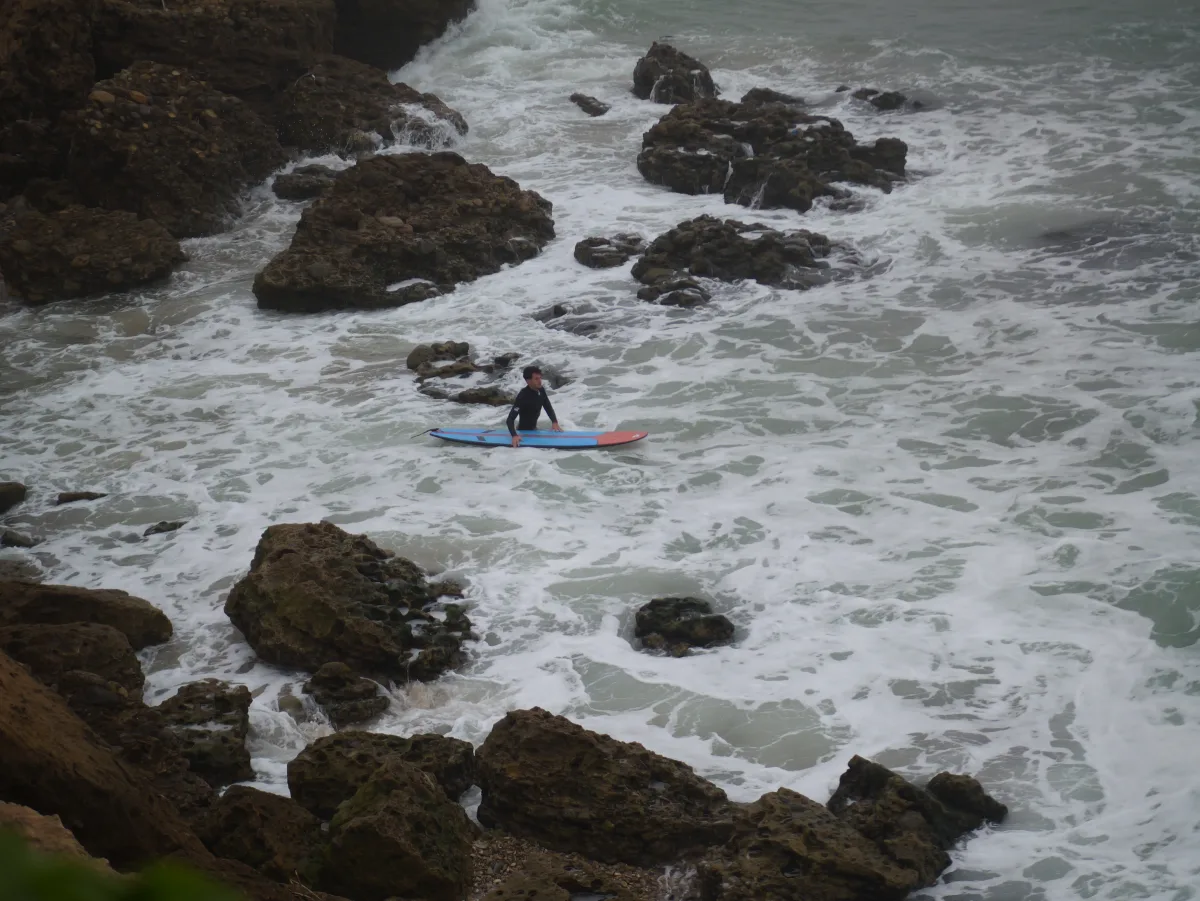
- Never surfed, or one week of whitewater behind you: April–June or September–October. Warm, calm, forgiving.
- You surf green waves and want to progress: October–November or March. Real swell, without the January intensity.
- You live for long point-break walls: December–February, and book early, everyone like you has the same idea.
- You want the village at its most Moroccan: July–August, and surf at sunrise before the beach fills up.
The bay works twelve months a year. The only genuinely wrong move is expecting January waves in June, or June peace in January.
FAQ
October, if one month must win: consistent swell, 21°C water, golden light and moderate crowds. For beginners specifically, May and June offer smaller waves and empty line-ups.
Not too much, but not ideal. Coaches will find you protected corners, yet the ocean is at its most powerful from December to February. If your dates are flexible, learning is easier and more fun in the shoulder months.
Between 18°C in mid-winter and 21–22°C in early autumn. A 3/2 wetsuit covers the whole year.
Yes, smaller ones. June to August brings gentle waves suited to first-timers, and the beaches fill with Moroccan families rather than surf tourists.
May and early June: the winter surfers have left, summer holidays have not started, and the waves are small but clean.
Most do, including ours. The offer shifts with the season: more coaching-focused weeks in the soft months, more guiding in winter.
---
Then the next question is the wave itself, which spot matches your level. That's exactly what our guide to the bay's surf spots walks through, beach by beach. And if you already know your dates, write to us on WhatsApp, we answer with real availability, day or night.