Now, the map nobody hands you at a tourist office.
Most spot guides are written from a desk far away, with names copied off a forum. I wrote this one after checking it on foot, notebook in hand, before breakfast, because that's literally what we do every morning to know where to take our guests.
The map, from south to north
Agadir → Anza → Aourir → K12 · K11 → Banana Point → Spiders → Devil's Rock → Crocos → K17 → Panoramas → Taghazout (Hash Point · La Source) → Anchor Point → Killers.
Two things matter more than names. First, the bottom: sand forgives, rock does not. Second, the day: any spot can be gentle or serious depending on the swell. Level labels below assume a normal day of the season, your coach will always adjust based on what they see that morning.
Where you learn (your first weeks on a board)
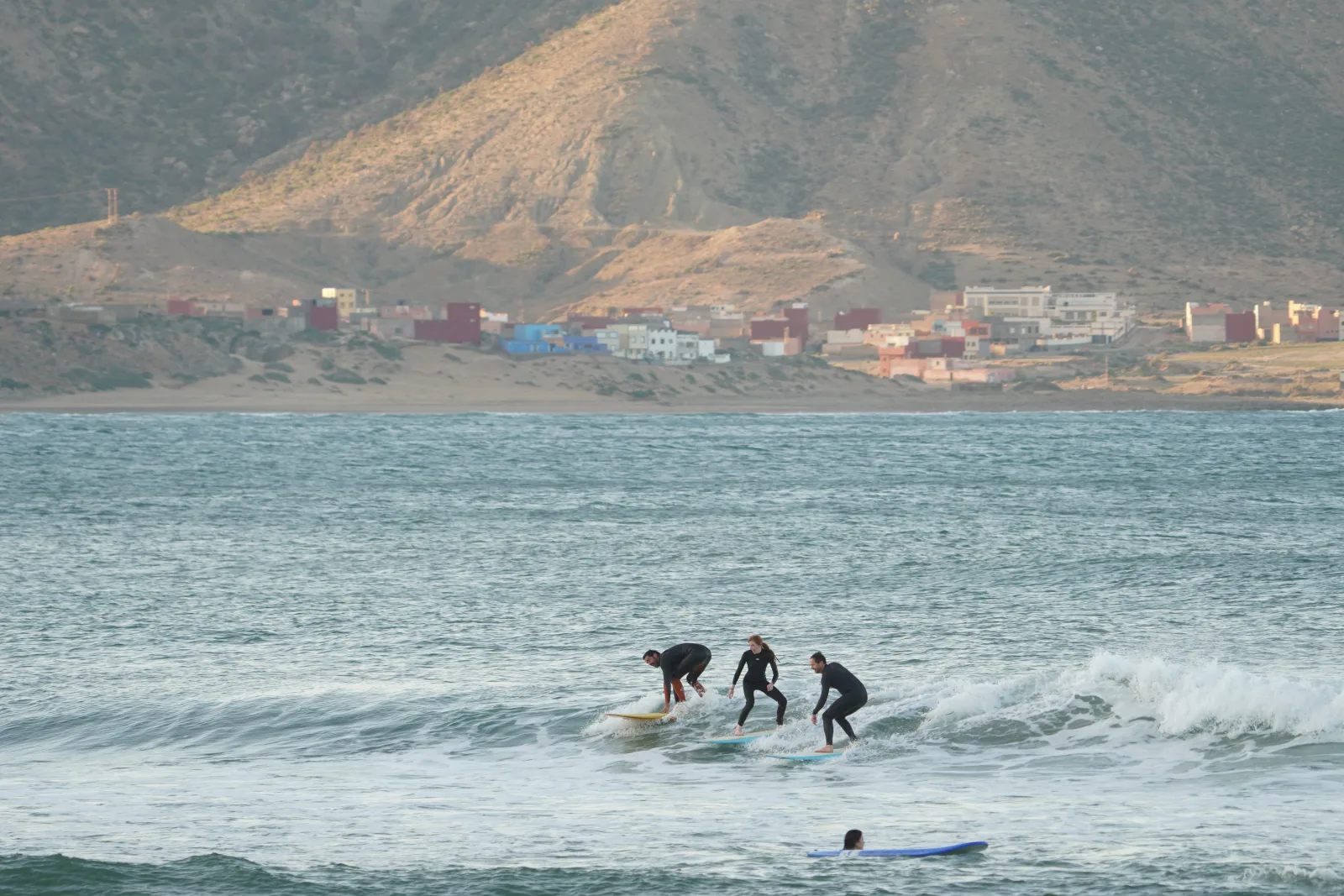
Devil's Rock, Tamraght's front garden. A wide beach break with an A-frame peak and a sandy bottom, ten minutes on foot from the village. Long, patient whitewater for first lessons, proper green shoulders further out when you progress. It's also the village's social centre: at sunset half of Tamraght sits on this sand, and nobody thinks it strange when you sit down with them.
Banana Point, the gentle right. In front of the banana fields of Aourir, a soft right-hander peels around the point and gives long, slow rides, the wave longboarders cross the world for. On small-to-medium days it's a beginner's dream; when the swell grows it becomes an improver's playground.
The beach stretch between them. On any given morning, coaches spread their groups along this sand depending on banks and tide. Not glamorous to describe, but it's where the actual learning happens, and where I've watched the most first waves ridden standing up.
Where you progress (green waves, first turns)
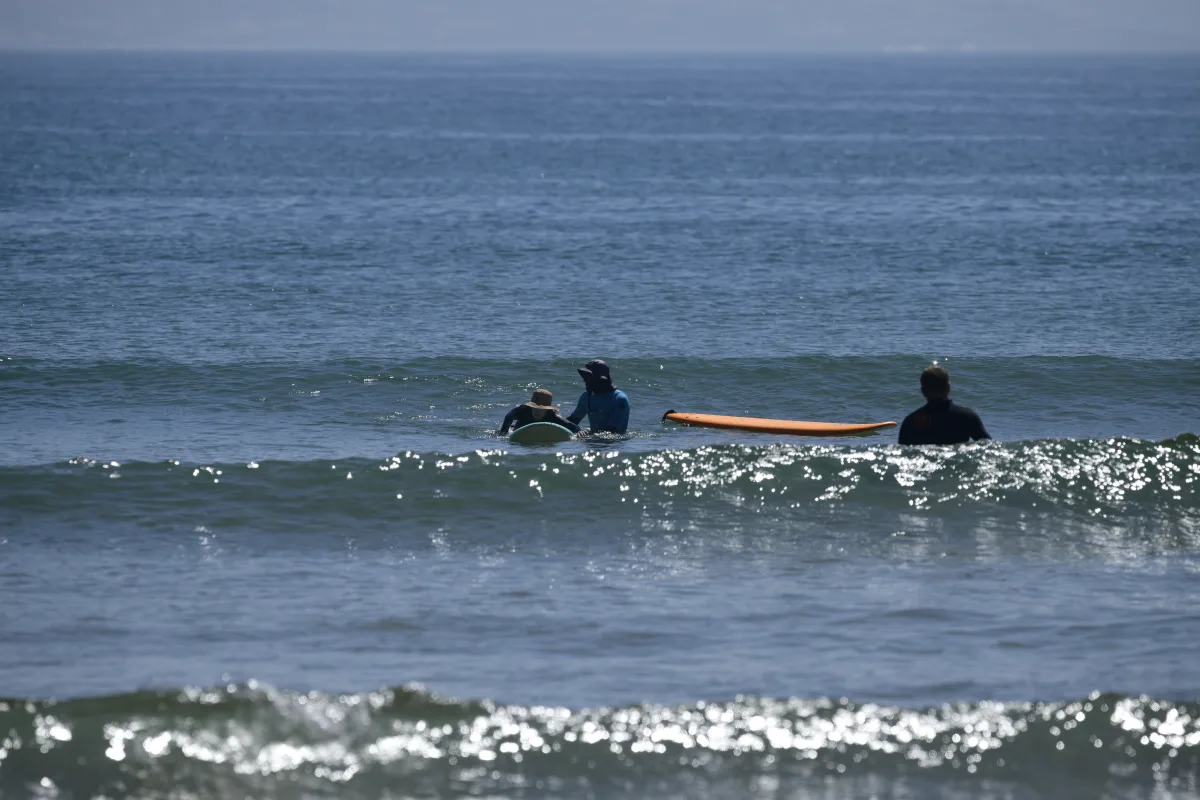
Panoramas. The most reliable wave in the bay for improvers: long, gentle rights over sand and rock, room for everyone, and a wave face that gives you time to think. Most schools bring their green-wave groups here, for good reason.
Crocos. A step up: a rockier right with more push, beautiful in the evening light. Good for confident improvers who can already pick a line and hold it.
K17 and the K-beaches. Between Aourir and Tamraght, a string of peaks that catch different swells. Your coach's local knowledge earns its keep here, the letter names mean nothing, the sandbank of the week means everything.
Hash Point. Right under Taghazout's terraces, a mellow right with an easy take-off. Crowded, sociable, and a friendly first taste of point-break surfing.
Where you watch (for now)
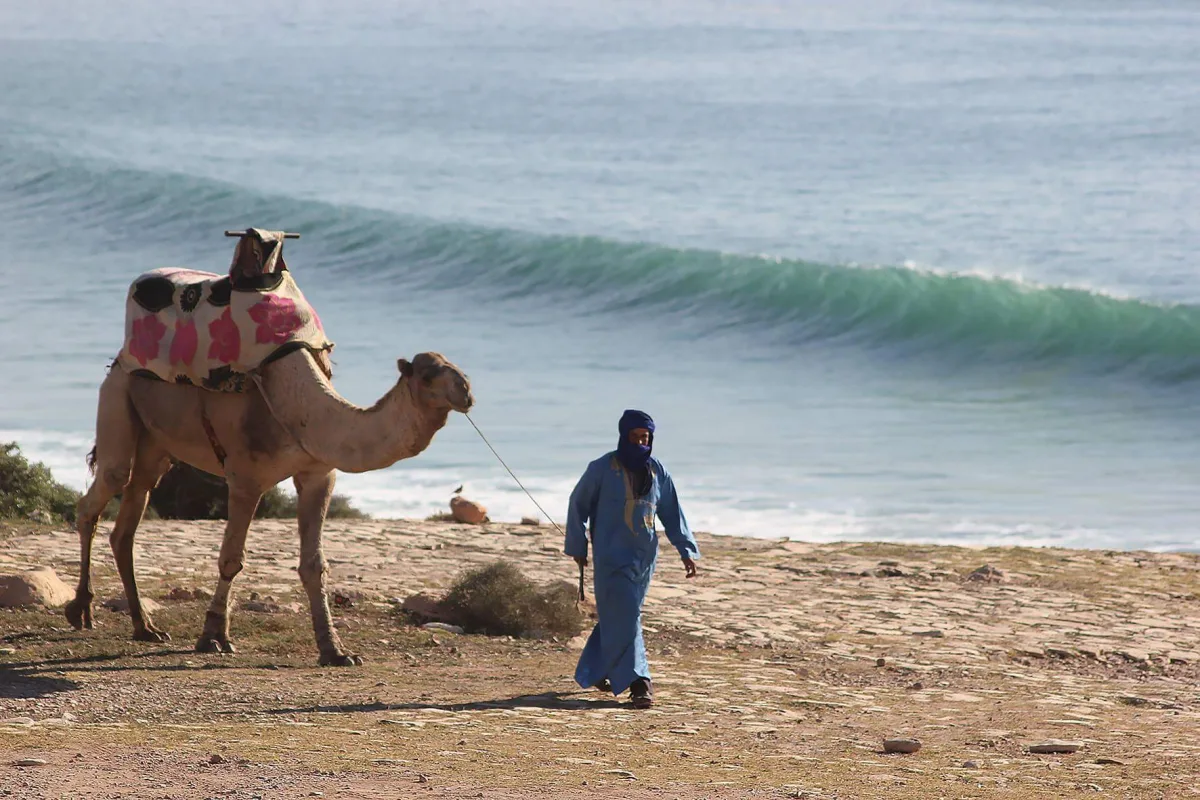
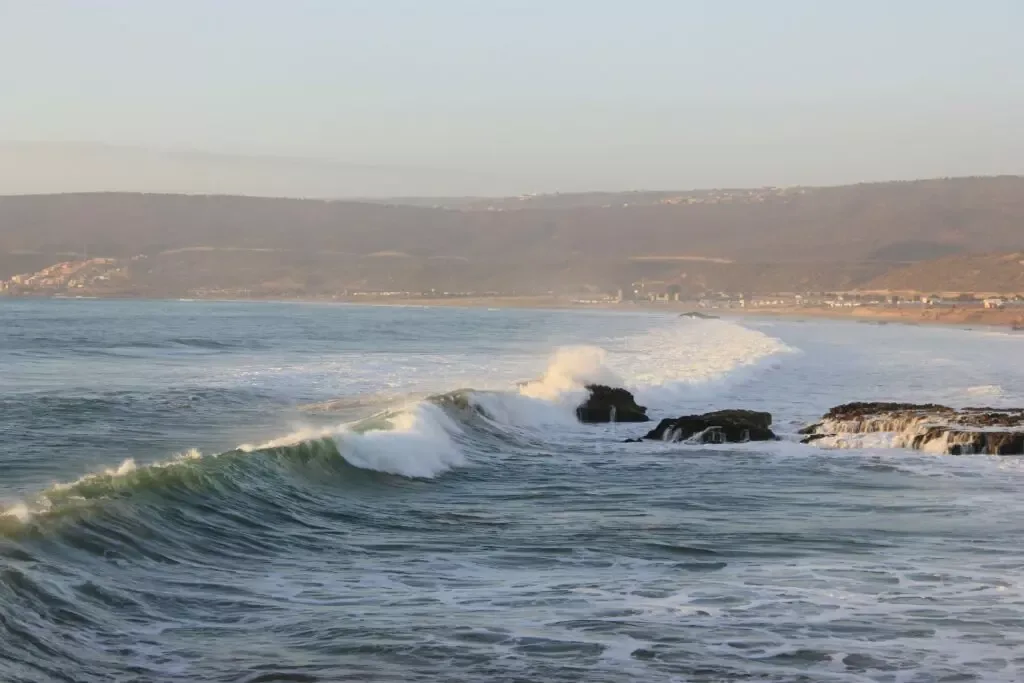
Anchor Point. Morocco's most famous wave: a long right-hander that, on a good winter day, connects sections for hundreds of metres. It's also a rocky point with a committing entry, strong current, and a line-up full of people who surf it every week. The advice I give everyone: watch it from the cliff with a mint tea, study how the locals enter off the rocks, and earn it over a few trips. It will still be there.
Killer Point. Further north, bigger, longer, emptier. Named after the killer whales sometimes seen offshore, not after what it does to beginners, though the doubt is fair. Advanced surfers only, and even they check the day twice.
La Source and the outer reefs. Between Taghazout and Anchors, tide-sensitive reef waves that reward experience and good local company.
How a good week actually moves through the bay
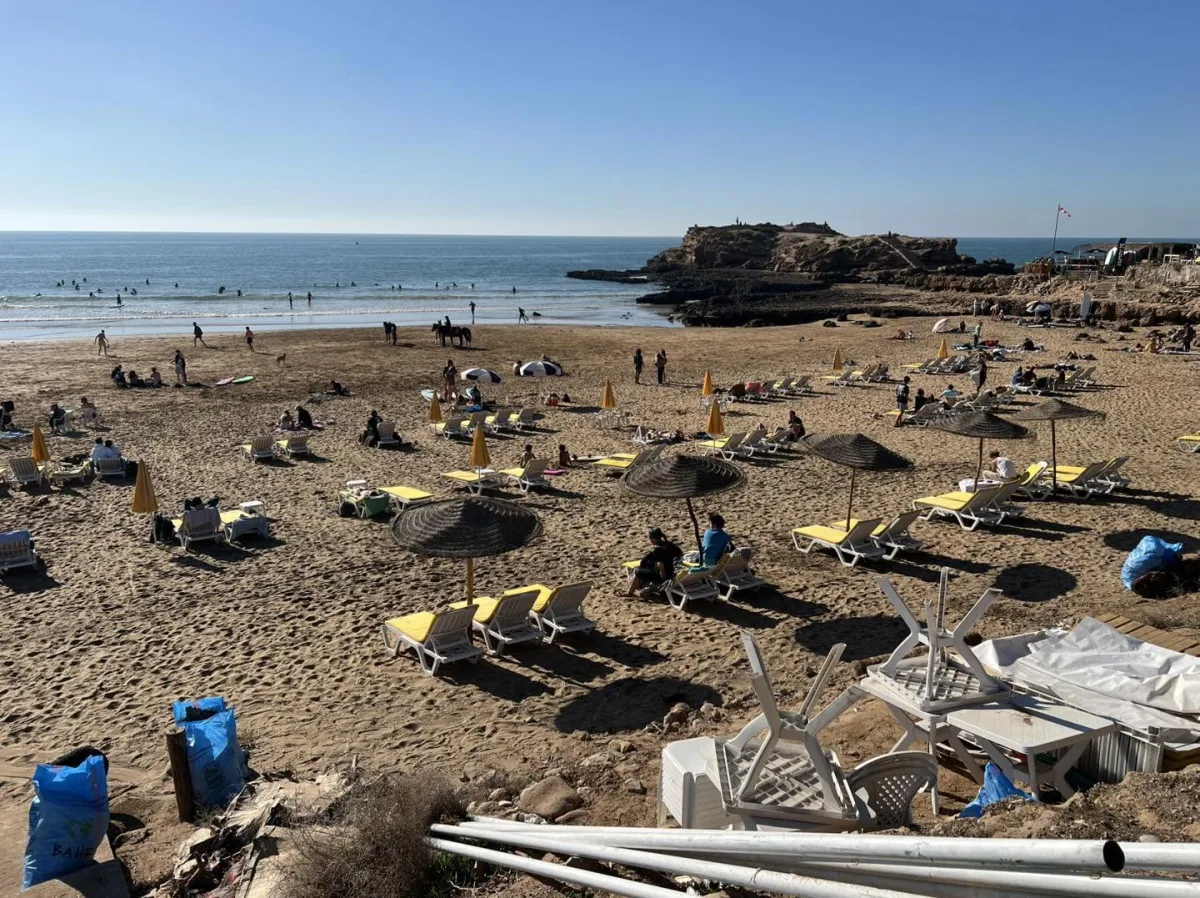
Day one and two: whitewater at Devil's Rock, learning to pop up where falling costs nothing. Mid-week: first green waves at Banana or Panoramas, depending on the bank. End of week: for some, a first real ride at Panoramas they'll describe at dinner for years; for others, more whitewater, and that's fine too. The bay doesn't hand out medals, it hands out mornings.
The mistake to avoid is measuring your week against the postcard. Anchor Point in January is the postcard. Your second-ever green wave at Banana in May is the story you'll actually tell, the one that brings you back.
FAQ
Devil's Rock and Banana Point, both at Tamraght's feet: sandy bottoms, long whitewater, easy access, and coaches everywhere. Panoramas joins the list once you chase green waves.
No, and every honest local will tell you the same. It's a rocky advanced point break with a committing entry. Watch it, learn from it, come back for it.
Not if you stay somewhere with coaching: reading the bay each morning is the coach's job. If you travel independently, ask at any surf shop, conditions change daily.
The learning beaches are sandy and mellow by ocean standards, but the Atlantic is real: currents exist, and swimming alone far out is unwise anywhere. Surf with someone who knows the day.
Devil's Rock and Banana Point: 10 minutes on foot. Panoramas and Crocos: a few minutes by car. Anchor Point: about 20 minutes up the coast.
Every second doorway in Taghazout, and several in Tamraght, count 100–150 dirhams for a half-day with a wetsuit. If you stay with us, boards and suits are already included.
---
That's literally what our coaches do, and the right wave on the right day is most of the progress. Check when to come if your dates are still open, then write to us on WhatsApp: tell us your level honestly, and we'll tell you honestly what your week can look like.