Now, a confession.
I systematically underestimated the size of a tagine for my first three weeks here. Every single time. We still laugh about the day I ordered a dish "for myself" thinking we would share, and had to take three dignity breaks before finishing.
What you are going to eat, the glossary that changes everything
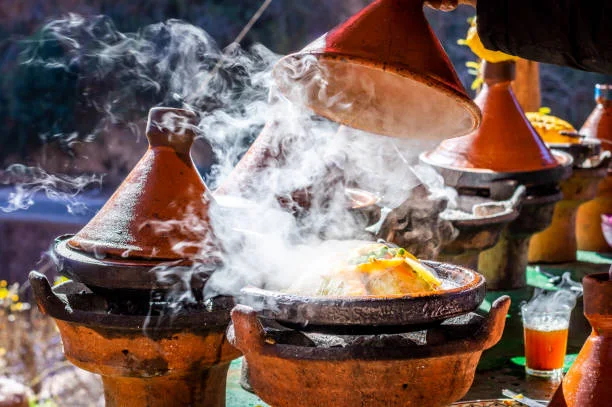
The tagine. The emblem dish: vegetables, sometimes meat or fish, cooked slowly under the conical lid. The vegetable one is everywhere, genuinely good, and vegan without trying. Count 50 to 90 dirhams.
Harira. A thick soup of tomatoes, lentils and chickpeas. Ask for the version without meat, it almost always exists. The official post-session comfort.
Zaalouk. Aubergine and tomato caviar in olive oil, served as a starter with bread. Vegan, addictive, around 20 to 30 dirhams.
Bissara. Broad bean purée with olive oil and cumin, the breakfast of the strong, and of surfers who saw the morning swell.
Msemen and amlou. The flaky breakfast pancake, and the argan-almond-honey paste locals call the "Moroccan Nutella". That duo alone justifies getting up.
Grilled sardines. We are on the Atlantic coast: Agadir sardines are a national institution. Simple, grilled, a few dirhams, the best happiness-to-price ratio in the country.
Vegetarian or vegan? Breathe, it is easy here
This is the worry I read most often before a first trip to Morocco, and the least justified, as long as you know how to order. Traditional Moroccan cooking is massively built on vegetables, pulses and bread. Vegetable tagine, zaalouk, bissara, meat-free harira, cooked salads: you can eat local and varied all week without touching the "western" menu.
The village also has its healthy scene: cafés with smoothie bowls, buddha bowls and vegan burgers on the Tamraght side, and fully vegan places on the Taghazout side. The "Instagram inflation" exists (a bowl sometimes costs more than a full tagine), but the offer is there, fresh and unapologetic.
One useful reflex I give all my vegetarian guests: say "no meat, no stock" (*bla lham, bla marka*), some apparently vegetarian dishes start from a meat base.
Where to sit, concretely
In the village, family cooking. The small Moroccan places in Tamraght serve tagines, couscous (Friday is the official day), grills and fresh juice. That is where the value is unbeatable and where the waiter knows your first name by day two.
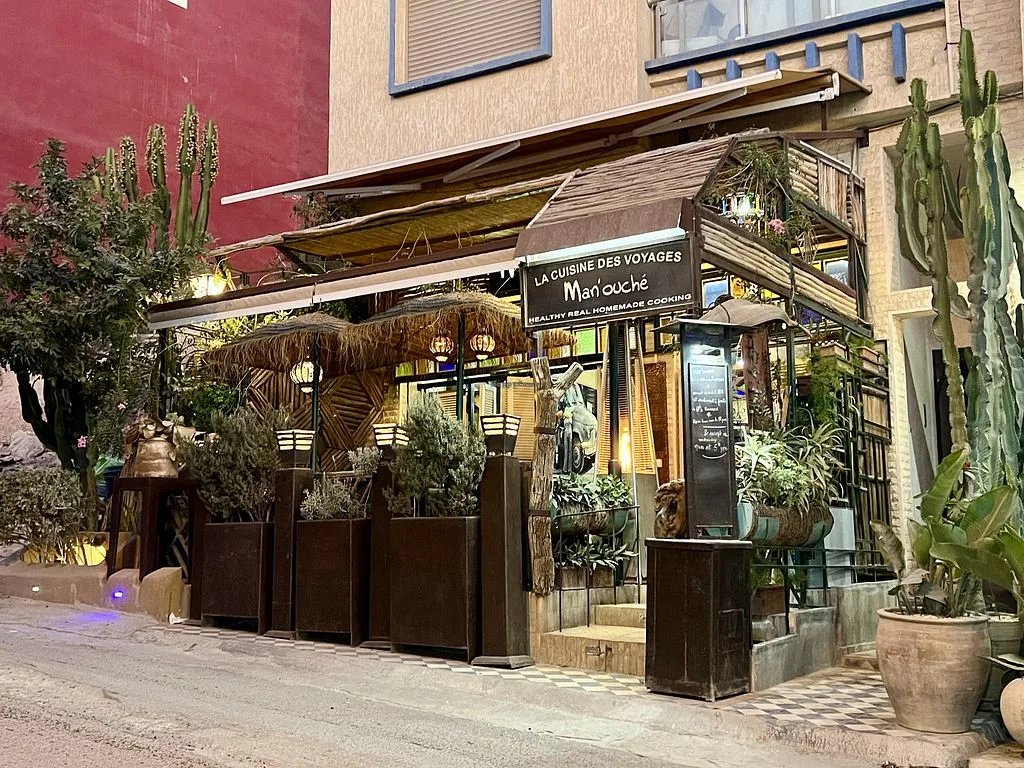
On the surf-café side. Between Tamraght and Taghazout, the healthy cafés line up brunches, bowls and turmeric lattes, often with a view and wifi. Perfect for the late post-session hour, when breakfast is a distant memory.
Taghazout for variety. Ten minutes by shared taxi (10 to 20 dirhams), ocean-facing terraces, the vegan addresses, and the buzz that comes with them. The full match-up between the two villages is here.
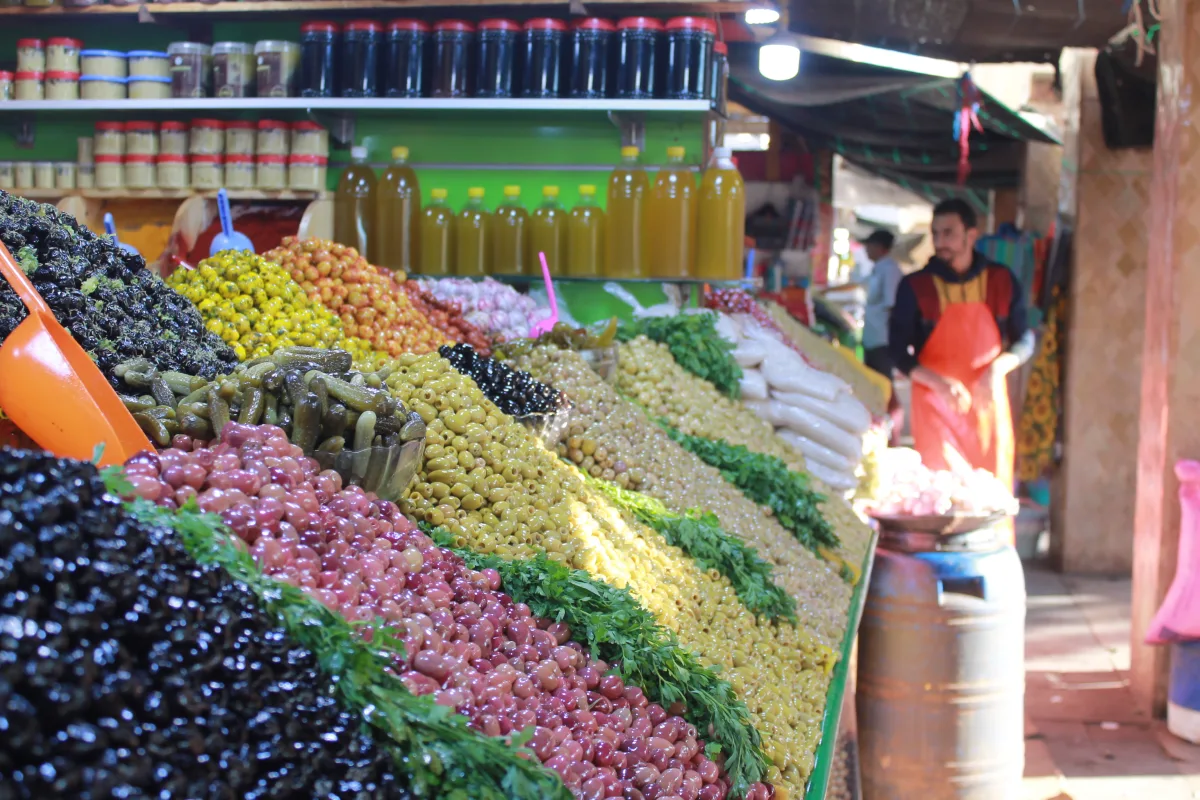
Aourir for the real market. On Wednesdays, the Aourir souk, the "banana village" five minutes away, overflows with fruit, vegetables, spices and olives. Even buying nothing, the walk is worth it.
Prices, to calibrate your budget
- Full breakfast in a café: 30 to 50 dirhams (€3 to €5)
- Tagine or dish of the day: 50 to 90 dirhams (€5 to €9)
- Smoothie bowl: 50 to 70 dirhams, yes, nearly the price of a tagine
- Fresh orange juice: 10 to 20 dirhams
- Mint tea: 10 to 20 dirhams, refusing is impolite
- Full dinner for two, local place: 150 to 250 dirhams
The cash point, important: the vast majority of places take cash only. Tamraght has very few ATMs; the reliable ones are in Aourir, five minutes away. Withdraw before you are hungry, literally.
Three reflexes of a good guest
Water: drink bottled water, like everyone here. Tea: accept it, it is a language. Ramadan: if your stay falls inside it, tourist restaurants stay open during the day, but dining after sunset, when the whole village comes back to life at once, is an experience worth more than any guidebook.
FAQ
In the small family places in the village for tagines and couscous (50 to 90 dirhams a dish), in the healthy cafés for brunches and bowls, and in Taghazout (ten minutes) for ocean-facing terraces and vegan addresses.
Yes, more easily than people imagine: vegetable tagine, zaalouk, bissara, meat-free harira, the Moroccan base is largely plant-based. Specify "no meat, no stock" when ordering.
€5 to €9 for a main dish in a local place, €3 to €5 for a full breakfast, €15 to €25 for dinner for two. Healthy cafés sit slightly above.
Rarely, plan for cash. The nearest reliable ATMs are in Aourir, five minutes from Tamraght.
The vegetable tagine, harira, msemen with amlou at breakfast, grilled sardines from the coast, and a couscous on Friday, the day the whole country eats it.
Take bottled water, like the locals. Fresh juices and tea (boiled water) are no problem at all.
---
Two sessions a day dig deep, it is physiological and it is earned. Write to us on WhatsApp for your dates, and flag your dietary preferences when you book: vegetarian, vegan, gluten-free, the kitchen adapts, you just have to say so beforehand.